

Transcription built around your archive and its speakers.
Soundscript transcribes recordings for archives and collections, then brings the text and source audio together for human review. Corrected recordings become examples for refining recognition around each speaker’s pronunciation and vocabulary.
Explore AI integration for your businessVisit Soundscript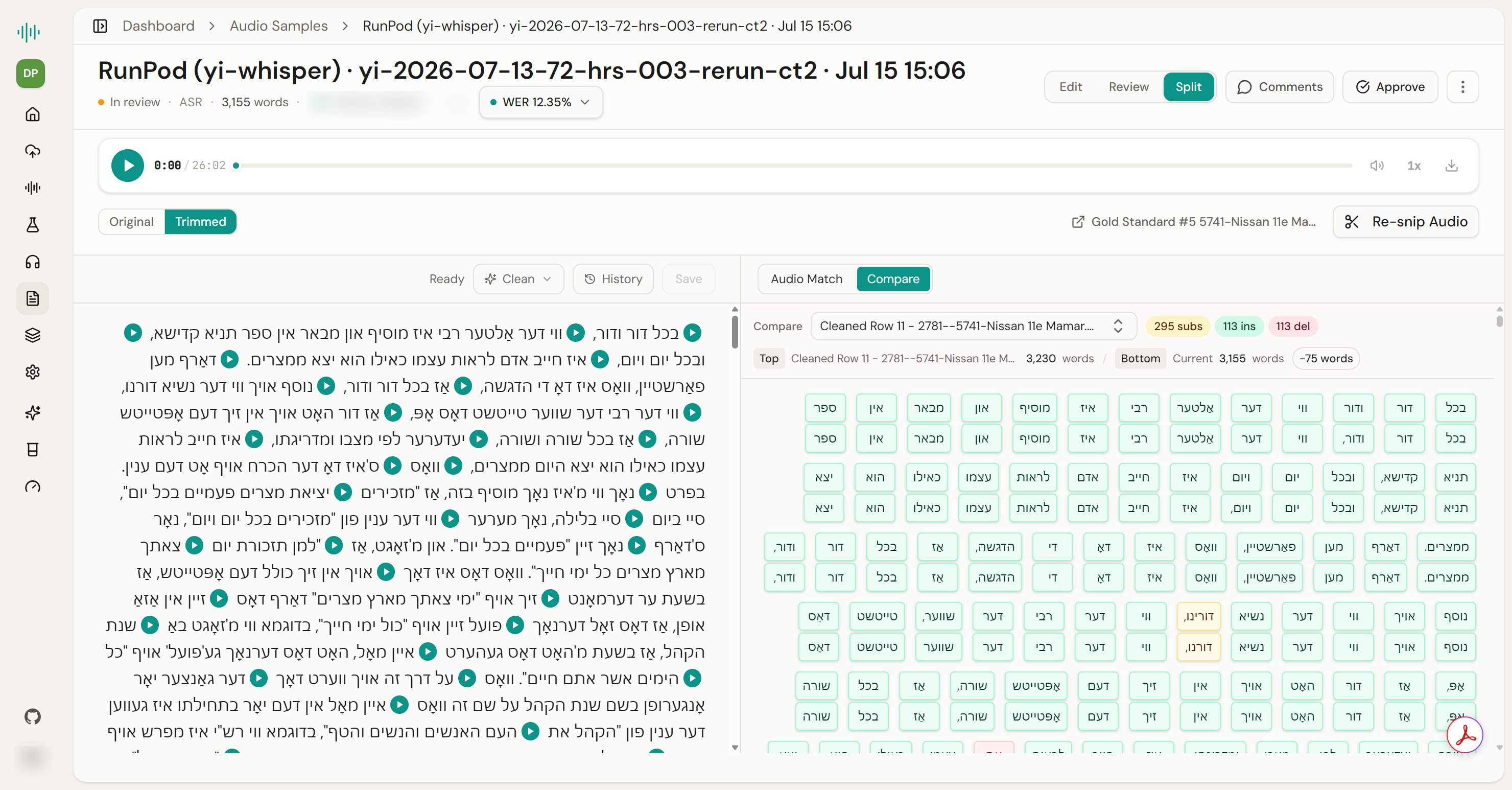
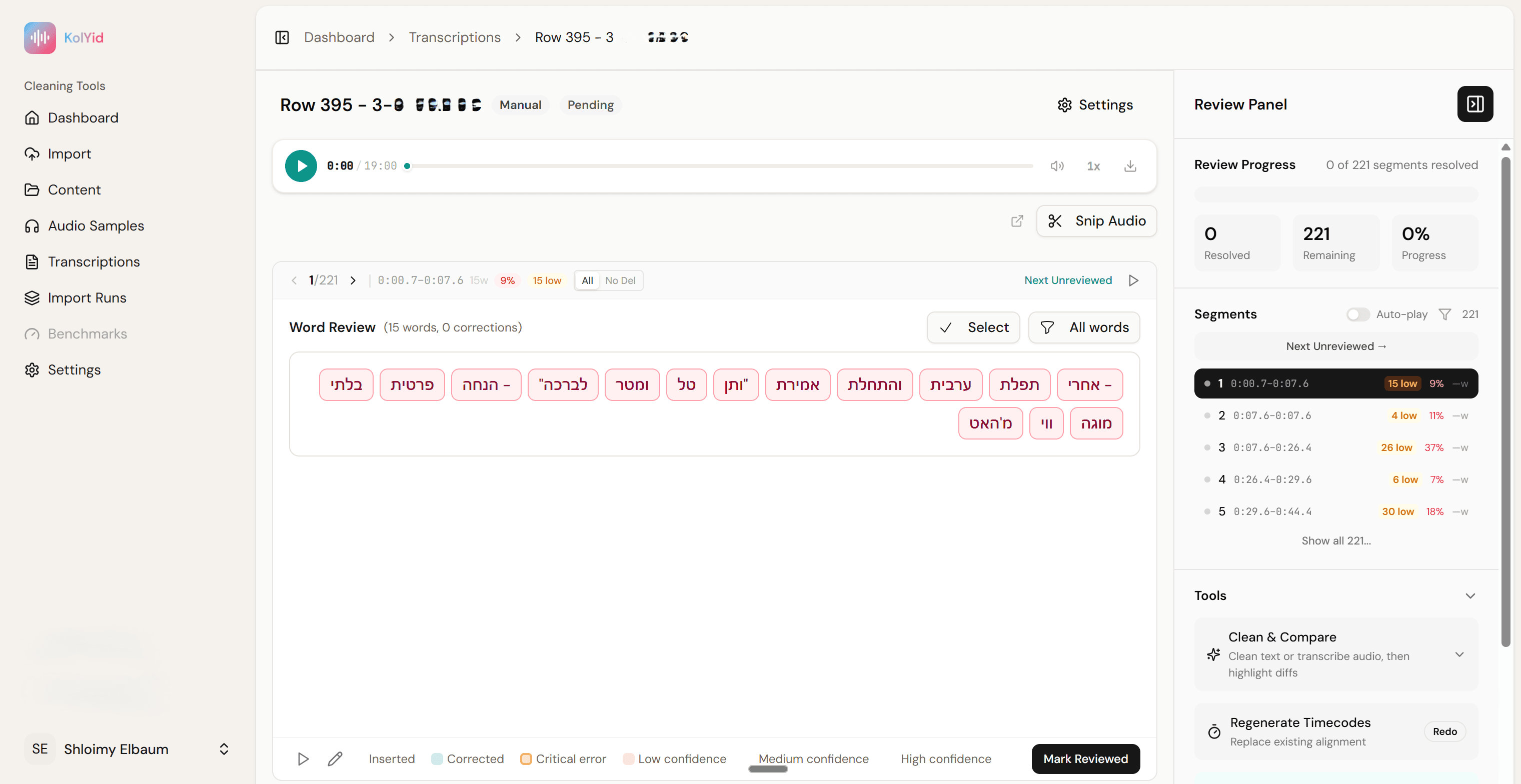
Focus human review on the words the speech-recognition model is least certain about.
Build better
training data.
Speech-recognition models depend on transcripts that match what was actually said. Soundscript turns that preparation into a structured review process.
LLM and rule-based cleaning can prepare a draft. The workspace then shows word-level differences, keeps each word tied to its audio timecode, and gives a reviewer the context to resolve the change. Human decisions remain part of the pipeline instead of living in disconnected notes or files.
Refine recognition around the speaker.
Reviewed recordings become training examples for the speaker’s pronunciation and vocabulary. Each model version is evaluated on separate recordings.
From model output to focused review
Once the model produces a transcript, Soundscript organizes it for production review. Low-confidence words are surfaced for a person to hear in context, correct, and mark as reviewed. Reviewers can work through the uncertainty without rereading every word as if the model had done nothing.
A cycle of review and refinement
Recurring errors guide the next round of refinement. Reviewers collect corrected examples of words the model still misses, update the training data, and evaluate the next version against checked transcripts from separate recordings.